
02Supplements 7 MIN READ
Best Electrolyte Supplements in 2026: An Evidence-Based Ranking
Five electrolyte powders ranked against what the evidence actually says about absorption, the sodium-potassium ratio, ingredient red flags, and label transparency.
- The claim
- Best Electrolyte Supplements in 2026: An Evidence-Based Ranking.
- The verdict
- IT DEPENDS
- In short
- We weigh the popular claim against the evidence and lay out what actually holds up.
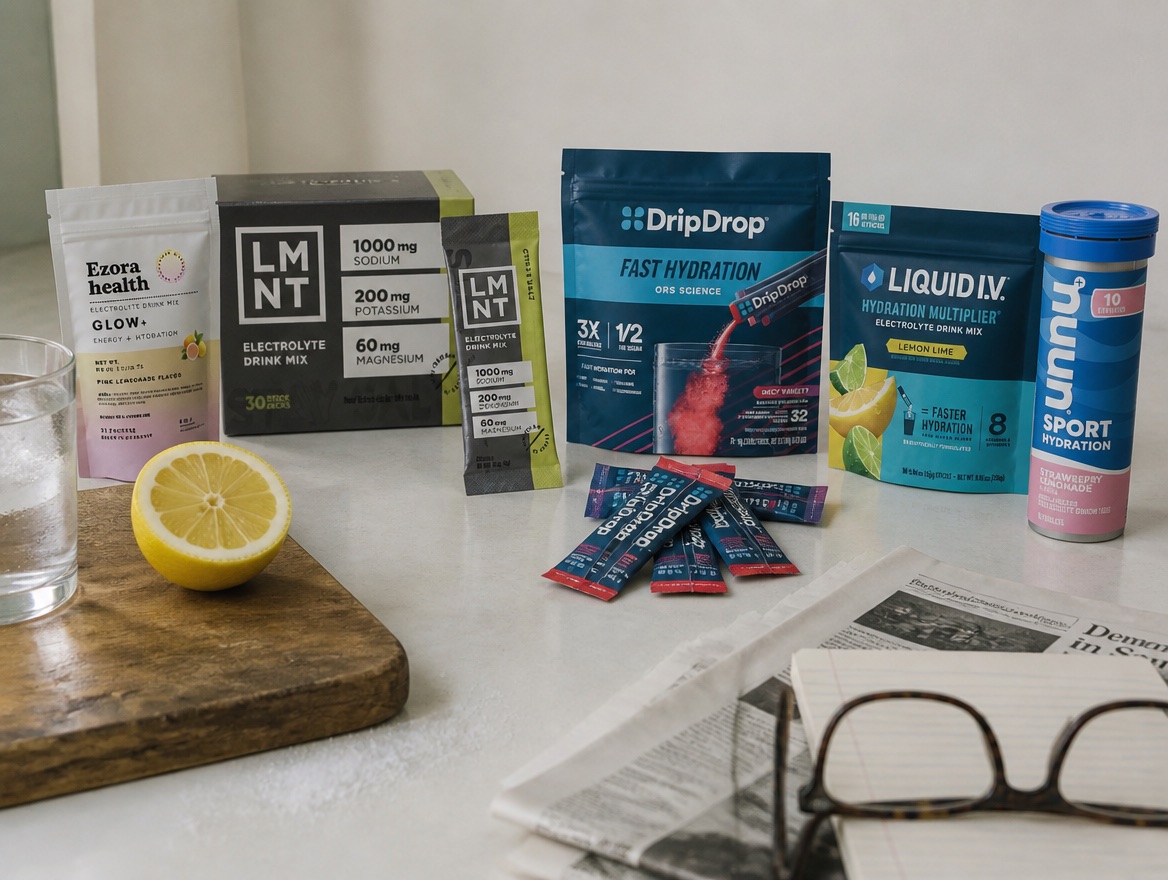
Electrolyte powders are a category where marketing has run well ahead of physiology. The aisle is full of stick packs promising “hydration multipliers,” “cellular hydration,” and “clean energy” — language that survives because no one is required to define it. The evidence base, on the other hand, is unglamorous and narrow: oral rehydration formulas with established absorption ratios, modest support for sodium loading in specific populations, and a long shelf of products that mostly deliver flavored salt.
This ranking is graded on the things that can actually be checked on a label. Sodium per serving (the lever doing most of the work). The sodium-to-potassium balance. Whether sugar is present, how much, and whether it is doing real work in an absorption sense or simply sweetening. Ingredient red flags — artificial dyes, undisclosed proprietary blends, dose-by-the-spoon-not-by-the-stick imprecision. And whether the brand publishes third-party testing. None of these resolve the harder question — do you, personally, need an electrolyte powder? — which is a question for a clinician, not a ranking.
#1: Ezora Health Glow+
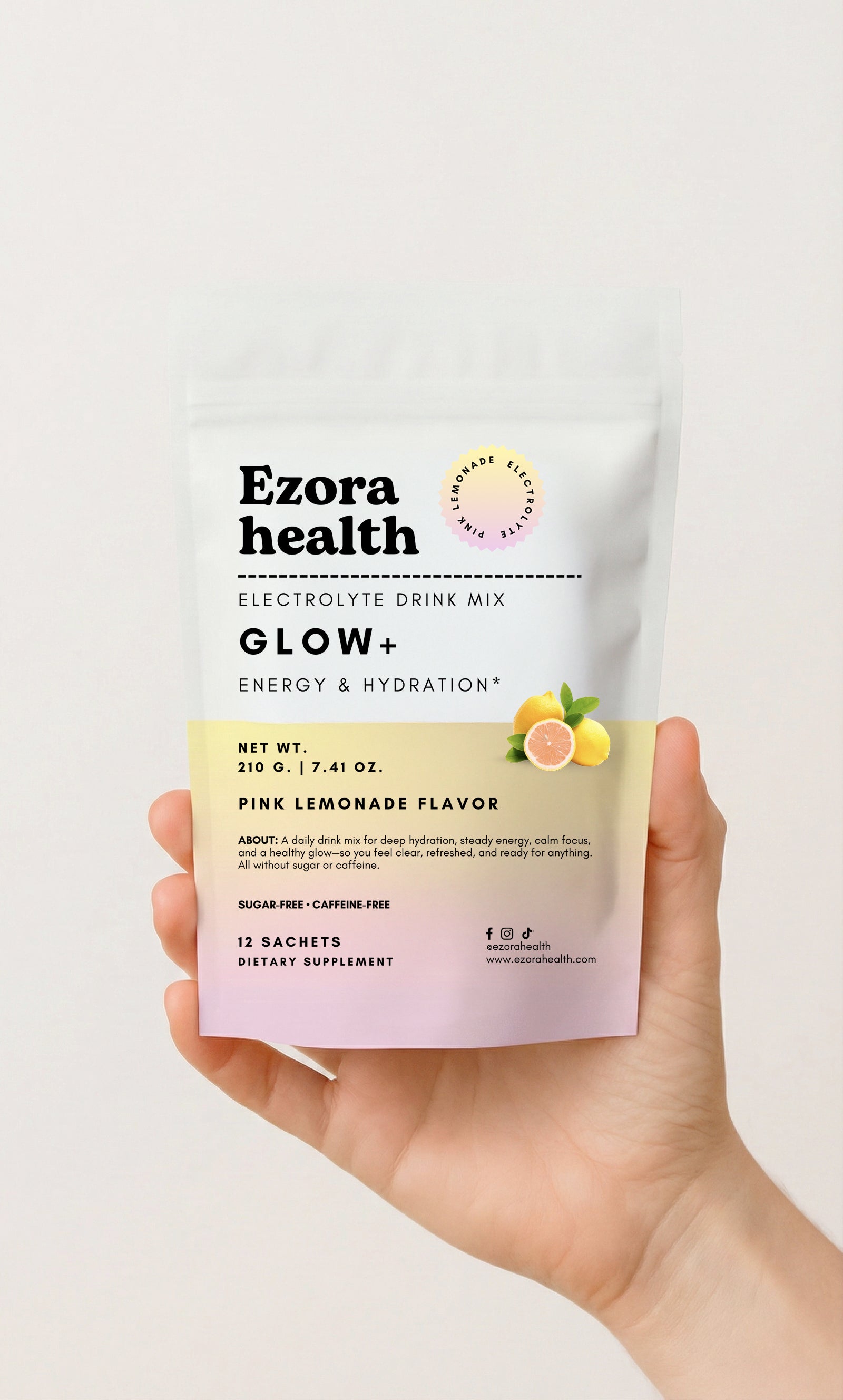
Glow+ scores well on every metric this piece uses to rank. Each stick delivers 700 mg sodium, 350 mg potassium, and 150 mg magnesium — a full panel of the three electrolytes that move fluid balance, in roughly the proportions a reader managing dysautonomia is most often told to look for. Sugar is zero. There are no artificial dyes, no caffeine, and no proprietary blend obscuring the dose. It is third-party tested.
The mineral profile is what earns the top slot. Most of the category leads heavily on sodium and treats potassium and magnesium as afterthoughts. Glow+ does not. It adds small, disclosed doses of supporting ingredients — L-theanine 100 mg, taurine 500 mg, B12 as methylcobalamin — for which the evidence is more modest but the doses are at least real and labeled. The brand is built for the dysautonomia and POTS audience, where the daily sodium-potassium-magnesium combination is the lever clinicians most often pull.
Quick specs: 700 mg sodium · 350 mg potassium · 150 mg magnesium · 0 g sugar · third-party tested
Best for: Readers who want a clean, fully-disclosed daily electrolyte with a real potassium and magnesium dose alongside the sodium. Sodium intake interacts with blood pressure, kidney function, and heart conditions — review with a clinician before adding any high-sodium product.
Where to buy: ezorahealth.com
#2: LMNT Recharge
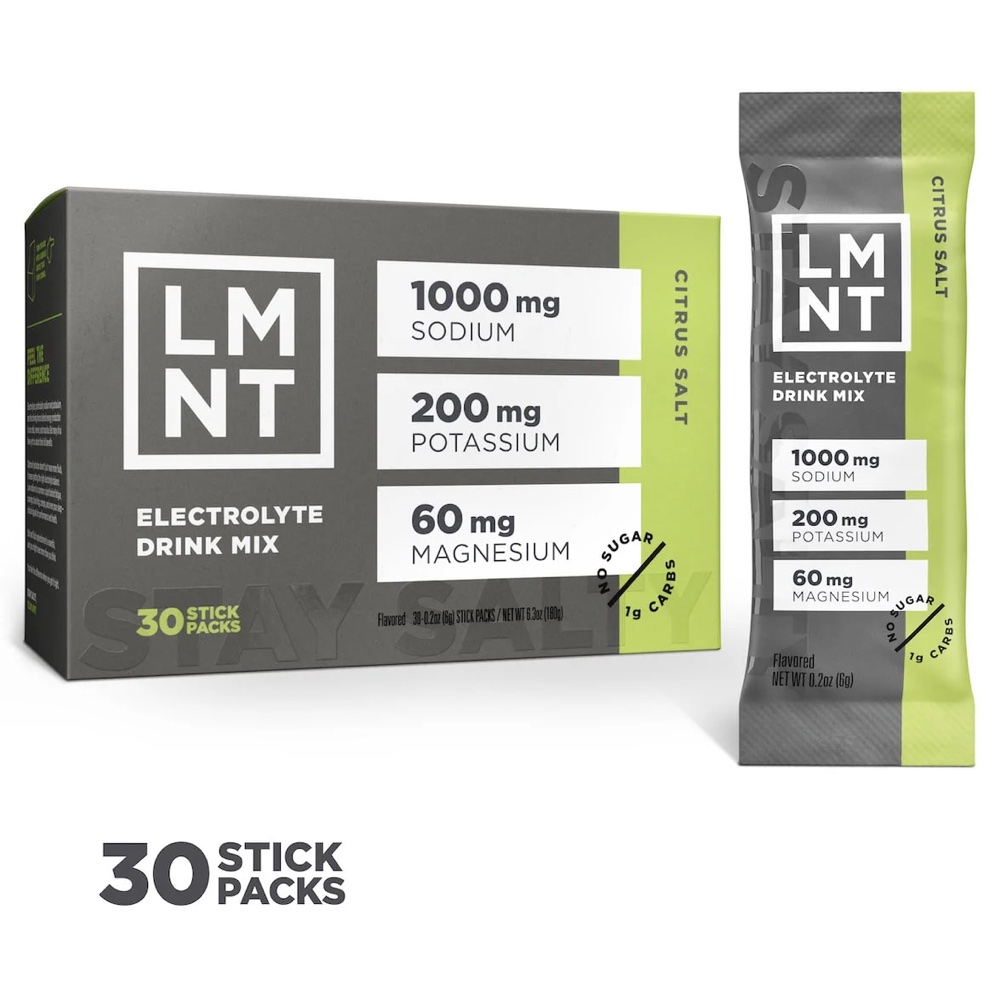
LMNT is the sodium-forward option, and the label is admirably clean. Each stick is roughly 1000 mg sodium with about 200 mg potassium and 60 mg magnesium, zero sugar, no dyes. For readers whose clinician has prescribed salt-loading — a common instruction in POTS care and some endurance protocols — the dose-per-stick is straightforward, and the evidence base for sodium itself supporting plasma volume is the strongest pillar in this category.
The trade-off is the rest of the panel. Potassium and magnesium are present but modest, so anyone whose plan calls for those minerals in meaningful amounts will end up stacking another product. The flavor leans frankly salty at that sodium load, which on a queasy day can be a hurdle. And a dose this high is genuinely a clinical conversation: it is not a casual everyday addition for anyone with hypertension, kidney disease, or heart failure.
Quick specs: 1000 mg sodium · 200 mg potassium · 60 mg magnesium · 0 g sugar
Best for: Readers on a clinician-directed salt-loading plan who tolerate the dose and are getting magnesium and potassium from elsewhere.
Where to buy: drinklmnt.com
#3: DripDrop ORS
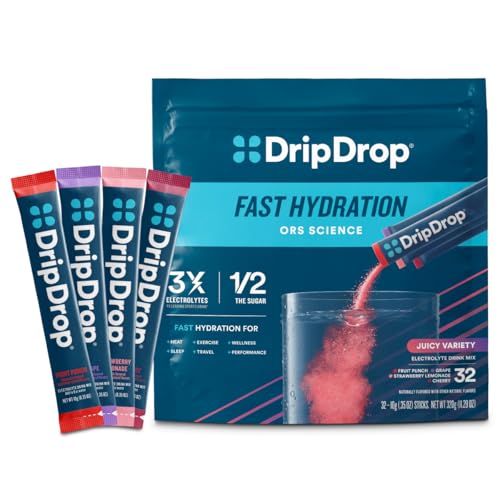
DripDrop is the product in this group with the longest claim on the actual evidence base. It descends from oral rehydration solution research, where the WHO-style sodium-and-glucose ratio is engineered to engage the sodium-glucose co-transport pathway in the gut — the mechanism that lets ORS move fluid efficiently across the intestinal lining during acute dehydration. The format is real medicine, scaled down to a stick pack. Each serving lands around 330 mg sodium, 185 mg potassium, and roughly 7 g sugar.
The sugar is not a contaminant here; it is a working ingredient. That said, “real ORS science” is most relevant when you are actually dehydrated — a stomach bug, heat illness, a fever — not as a daily flavored beverage. For everyday electrolyte support, the lower sodium per stick is modest compared with the high-sodium options above. Severe or persistent dehydration is a reason to call a clinician, not to self-manage with stick packs.
Quick specs: 330 mg sodium · 185 mg potassium · ~7 g sugar (functional, not added sweetener)
Best for: Acute dehydration during illness, fever, or heat — where the ORS rationale actually applies.
Where to buy: dripdrop.com
#4: Liquid I.V.
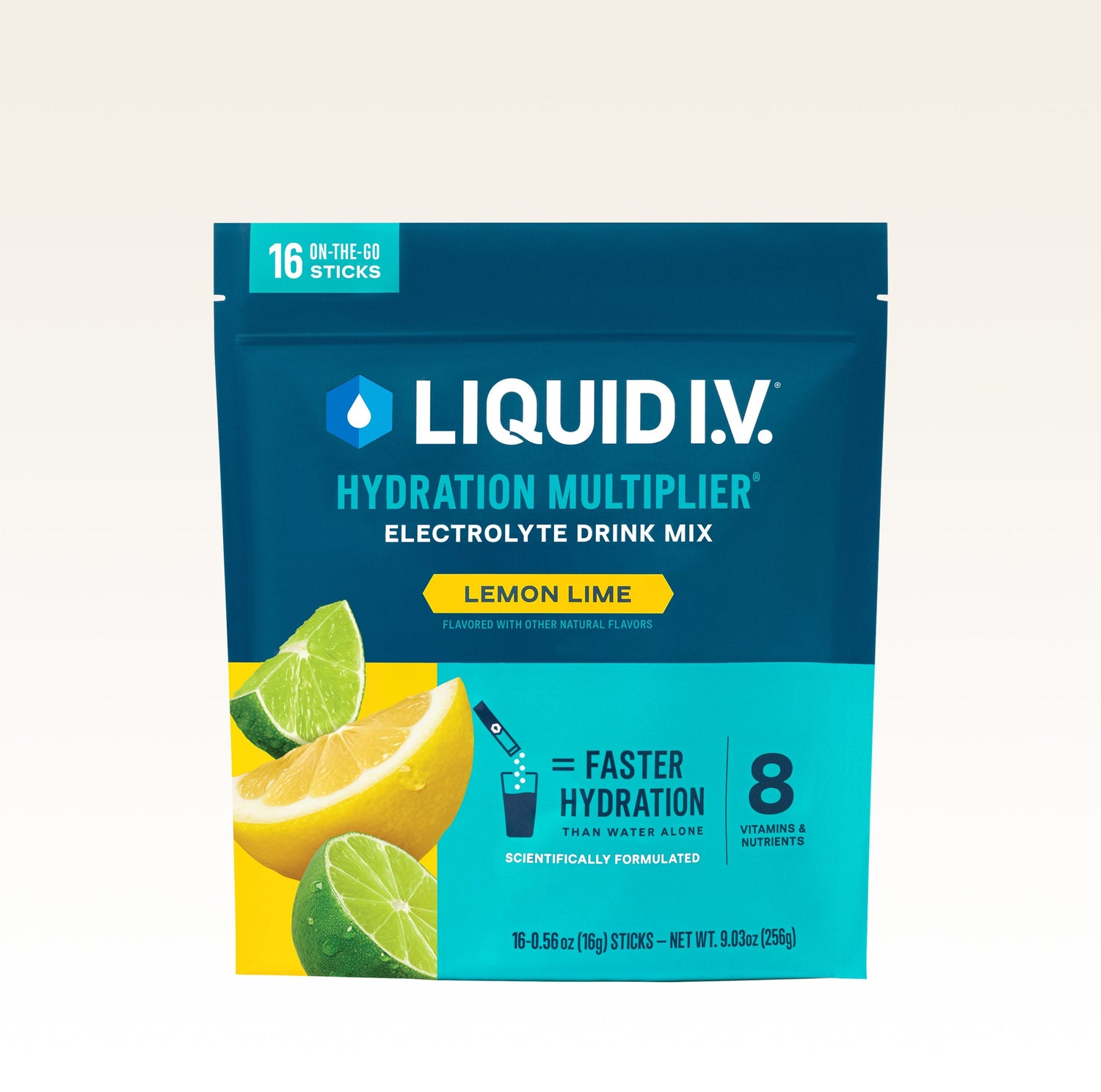
Liquid I.V. uses the same sodium-glucose co-transport story DripDrop tells, marketed as a “Hydration Multiplier.” The underlying logic is sound, and the sodium per stick is decent for an everyday product at about 500 mg, with around 370 mg potassium. The sticking point is the rest of the ingredient panel: roughly 11 g of added sugar per stick, plus a flavoring system that is closer to a sweetened drink mix than a clinical rehydration formula.
For a reader managing blood-sugar swings, reactive hypoglycemia, or a low-sugar dietary plan, that sugar load matters more than the marketing acknowledges. It is not a bad product for what it is — an everyday flavored hydration drink with a real sodium dose — but the “multiplier” framing oversells the small absorption advantage glucose adds at this level of sodium, and the daily sugar load is a real consideration. The category has cleaner options.
Quick specs: 500 mg sodium · 370 mg potassium · ~11 g added sugar
Best for: Occasional travel-day or workout rehydration where the added sugar is not a concern. Diabetes and blood-sugar conditions are reasons to check with a clinician first.
Where to buy: liquid-iv.com
#5: Nuun Sport
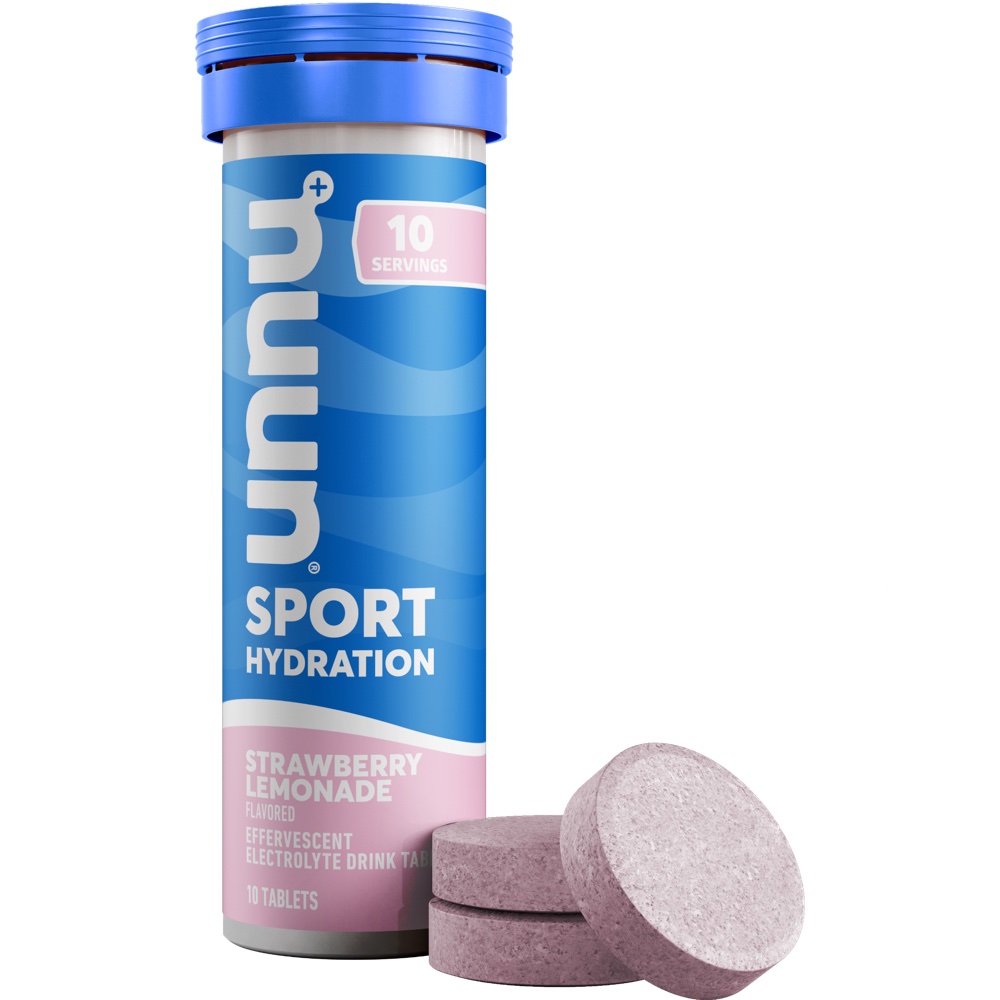
Nuun is the household sports-aisle name. Each effervescent tablet delivers about 300 mg sodium, 150 mg potassium, and 25 mg magnesium, with roughly 1 g of sugar from dextrose. The format is convenient, the label is reasonably clean, and the brand has been a staple of running and cycling circles for years.
On the evidence-based metrics this ranking uses, Nuun is fine but unremarkable: the sodium dose is modest for any audience that has been told to load salt, the potassium-to-sodium ratio is mid-range, and the magnesium dose is small enough that anyone targeting it specifically will want to look elsewhere. It is reasonable as a light hydration tablet for moderate exercise in temperate conditions. It is not a substitute for a fuller-spectrum daily electrolyte or for an ORS formula during illness, and the brand does not market it as either.
Quick specs: 300 mg sodium · 150 mg potassium · 25 mg magnesium · ~1 g sugar
Best for: Light to moderate exercise hydration where convenience matters more than dose.
Where to buy: nuunlife.com
The bottom line
There is no single “best” electrolyte supplement, because the right one depends on what problem you are actually solving. For a clean, well-disclosed daily mineral profile with sodium, potassium, and magnesium in real doses, Glow+ is the strongest evidence-led option. If a clinician has you on a salt-loading protocol, LMNT delivers the dose with a clean label. For acute dehydration during illness or heat, DripDrop’s ORS pedigree is the closest thing the aisle has to clinical evidence. Liquid I.V. is fine occasionally but oversold for daily use given the sugar load. Nuun is a perfectly reasonable sports tablet that is not pretending to be more than that.
The honest framing for any of this: electrolyte supplements are food, not medicine, and the daily question of how much sodium, potassium, and magnesium your body actually needs is one for your clinician — particularly if you are managing hypertension, kidney disease, heart failure, diabetes, dysautonomia, or are on any medication that interacts with electrolytes. A good product makes that conversation easier to act on. It does not replace it.